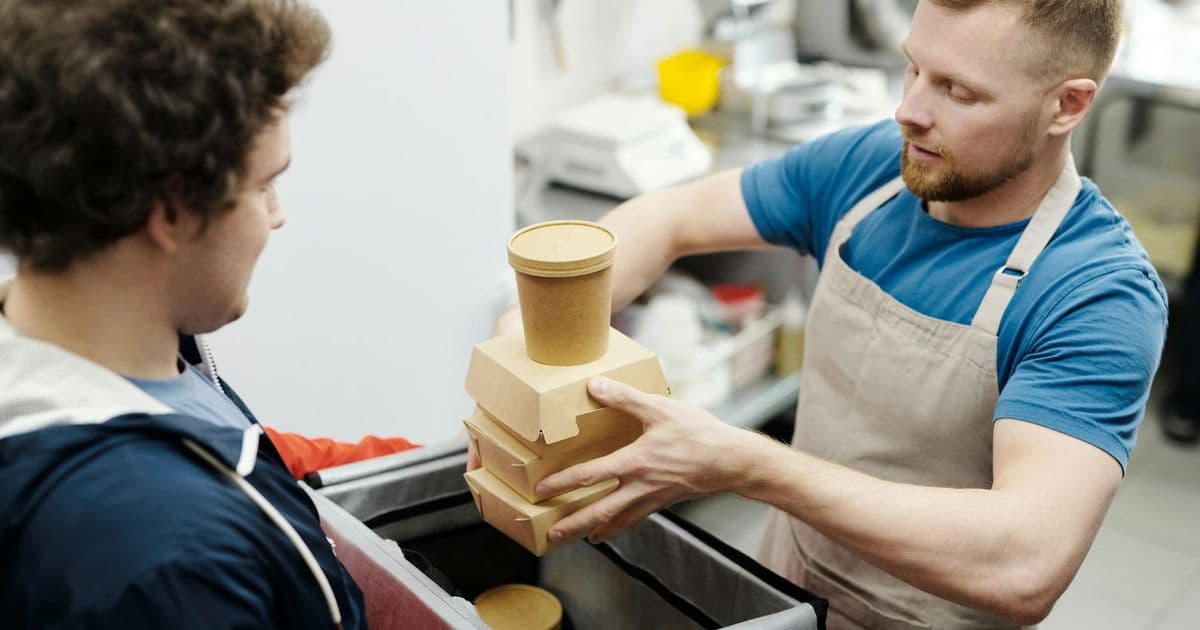
Running a cloud kitchen in Saudi Arabia means your entire customer relationship happens in a 30-minute delivery window. There is no decor to admire, no server to apologise on the spot, no manager to visit the table. By the time a customer opens the bag, you either earned a five-star review or you are about to manage a complaint on HungerStation, Jahez, and Google — possibly all three before the evening is over.
Why cloud-kitchen reputation is harder to manage than dine-in
Dine-in restaurants have friction built into the complaint process. A guest who receives a wrong dish can flag the waiter, get a replacement in minutes, and leave satisfied. The bad moment is absorbed before it becomes a public record. Cloud kitchens have no such buffer. The first time a customer experiences a problem is when they open the bag in their home, and the first place they report it is usually a review screen.
Every cloud-kitchen complaint is fundamentally operational. Cold food means temperature management failed between kitchen and bag, or the ride took too long, or the packaging is wrong for that dish. A missing item means a picker did not check the order against the ticket. A wrong order means a labelling or dispatch error at the kitchen handoff stage. None of these have an experiential variable — ambience, hospitality, or atmosphere — to offset them. The kitchen earns no credit for the visit itself because there is no visit.
The third compounding factor is cross-platform pollution. When a customer has a bad experience through HungerStation, a meaningful percentage will also leave a Google review because Google is where they research the next order. Delivery-app reviews and GBP reviews are algorithmically separate but reputationally connected. A pattern of identical complaints across HungerStation, Jahez, and Google tells a prospective customer something systematic is wrong — far more convincingly than a single one-star review ever could.
Brand-portfolio cloud kitchens — operations running Concept A, Concept B, and Concept C from one production address — amplify this problem further. Customers who receive an order from one concept sometimes review a different concept's GBP listing by mistake. If your GBP profile names one brand and the delivery app menu shows another, expect confusion reviews that no reply template can fully resolve. Clarity at the listing level is always cheaper than managing the fallout.
For a broader look at how operational reputation compounds across GCC markets, see the guide on reputation management for Saudi hotels during Hajj and Umrah season and how high-volume operations build reply systems that scale.
The GBP-vs-delivery-app conundrum for Saudi cloud kitchens
Not every cloud kitchen in Saudi Arabia has a Google Business Profile. Some operations exist exclusively through HungerStation or Jahez listings and have never claimed a GBP. This is an increasingly costly gap.
When a customer in Riyadh searches "chicken shawarma delivery near me" on Google Maps, profiles with verified GBP listings appear. Kitchens without one do not — they are invisible to that query. Given that a meaningful share of Saudi food delivery decisions now start with a Google search rather than opening an app directly, an unclaimed GBP listing represents lost top-of-funnel discovery.
The complication for cloud kitchens is category and address accuracy. Google's GBP guidelines require a physical address, and cloud kitchen locations are often in industrial areas or shared production hubs that do not match the branded storefront customers expect. The correct approach is to verify the GBP with the actual production address but use the profile to clearly communicate delivery-only status — setting "Delivery" as a service option, removing the "Has dining area" attribute, and specifying accurate delivery zones where possible.
Once a GBP is live, reviews split across two surfaces: GBP and the delivery app. Many operators monitor only the app because that is where the order volume shows. The result is a neglected GBP review feed where unanswered complaints from six months ago are visible to every prospective customer doing a Google search before ordering. A simple rule prevents this: any week that sees new HungerStation or Jahez reviews also requires a GBP audit. The two review surfaces need to be managed together, not in isolation.
ShgardiPlus and ToYou add further complexity because their review data does not natively integrate with GBP the way some restaurant-management platforms attempt to consolidate feedback. Until you have a unified inbox — which platforms like Taqymat make possible through onboarding — treat each channel as a separate daily task, not an optional weekly sweep.
The 5 most common cloud-kitchen complaint patterns and how to reply
Understanding the complaint patterns specific to cloud kitchens lets you write reply templates that are both faster and more credible than generic apology text.
Cold food. This is the highest-frequency cloud-kitchen complaint in Saudi Arabia, particularly during summer when ambient temperatures affect packaging performance during the final delivery leg. A strong reply acknowledges the specific failure, explains what the kitchen controls (insulated packaging, correct dispatch timing) without blaming the rider, and offers a clear remedy.
Template: "We're sorry the food arrived cold — that's not the experience we intend for you. We've reviewed the order timing and packaging standard for your item. Please reach out to us directly at [contact] and we'll arrange a fresh order or a full refund, whichever you prefer."
Missing item. Order completeness errors are usually a picker or station handoff issue. Customers who receive a missing item feel they were shorted, which generates disproportionate frustration relative to the item's value.
Template: "We apologise for the missing item in your order — that's a quality check failure on our side and we take it seriously. Please contact us directly with your order number and we'll send the missing item or credit your account immediately."
Wrong order. In brand-portfolio kitchens, wrong-order complaints sometimes reflect a dispatch labelling error where a bag from Concept B went to a Concept A customer. Acknowledge without exposing internal operations.
Template: "We're sorry you received an incorrect order. This is a packing and dispatch error and we are investigating how it occurred. Please reach out with your order details so we can send the correct items right away."
Late delivery. Customers understand that traffic exists. What they do not forgive is silence — no app notification updates, no explanation. Your reply cannot change what happened but it can demonstrate that you take fulfilment time seriously.
Template: "We're sorry your order arrived later than expected. We review delivery timing data for every order and will use yours to improve our dispatch process. If the delay affected the food quality, please tell us and we will make it right."
Packaging issue. Spilled sauces, crushed items, and leaking containers are packaging design or sealing failures. Customers photograph these. Replies need to acknowledge the photo if it was attached to the review and confirm a concrete operational fix.
Template: "That packaging failure is unacceptable and we're sorry. We have flagged this to our packaging team and are reviewing the sealing process for this item category. Please contact us directly — we want to replace the order and confirm the fix worked."
For structured reply templates calibrated to Arabic-speaking audiences specifically, see the full guide on one-star Arabic reply templates.
Pitfalls that make cloud-kitchen review replies backfire
Knowing what not to do is as valuable as having the right templates.
Blaming the rider. The most common mistake cloud kitchens make in public replies is attributing a cold-food or late-delivery complaint to the third-party delivery platform or its rider. "The delay was caused by the HungerStation driver" is visible to every prospective customer and communicates that you take no ownership of the end-to-end experience. Riders on HungerStation, Jahez, ToYou, and ShgardiPlus are the last physical touchpoint of your product. Customers do not distinguish between your kitchen and the platform — you are one chain to them. A public blame transfer destroys confidence faster than the original complaint.
Copy-paste apology text. Cloud kitchens with high order volumes sometimes deploy a single apology template for every negative review. Customers notice. A reply that uses identical wording across 20 reviews on the same listing signals a reputation management automation with no human behind it. Even templated replies need to reference one specific detail from the original complaint — the item mentioned, the date, or the specific issue described.
Ignoring the delivery-app review thread. HungerStation and Jahez both surface vendor replies inside their review interfaces. Operators who reply on Google but leave their app review threads unanswered create an asymmetric reputation: polished on one platform, silent on the one where the order actually happened. Customers who see an engaged Google reply and then find no response on the platform they used will feel the Google reply was performative.
No callback mechanism for high-value complaints. A customer who ordered a large family meal, received the wrong order, and left a detailed one-star review is not satisfied by a public reply. Replies should include a direct contact method — WhatsApp number, a dedicated complaints email, or an in-app resolution link — so the interaction can move off the public feed. Public threads that continue to escalate in the comments section of a review are visible to every searcher and compound reputational damage with each additional exchange.
What to do next
Start with an audit of your existing GBP listing. Confirm your profile is verified, your service options reflect delivery-only status, and your most recent reviews have replies. Then open your HungerStation and Jahez review dashboards and compare the complaint patterns there against your GBP feed — you will likely find the same operational issues appearing on both.
Build five reply templates using the patterns above and save them somewhere the person managing your reviews can access in under a minute. Speed matters: a reply posted within 24 hours reads as attentiveness; a reply posted two weeks later reads as damage control.
If you are running multiple brand concepts from one kitchen, audit each concept's GBP listing and app profile for cross-contamination reviews — complaints that were meant for another brand but landed on yours. Address them individually and use them as a diagnostic signal for where your dispatch labelling needs improvement.
When you are ready to move from manual reply management to a system that surfaces complaints across channels and generates context-aware Arabic and English replies, starting the Taqymat onboarding process takes less than five minutes and covers all major GCC delivery platforms.