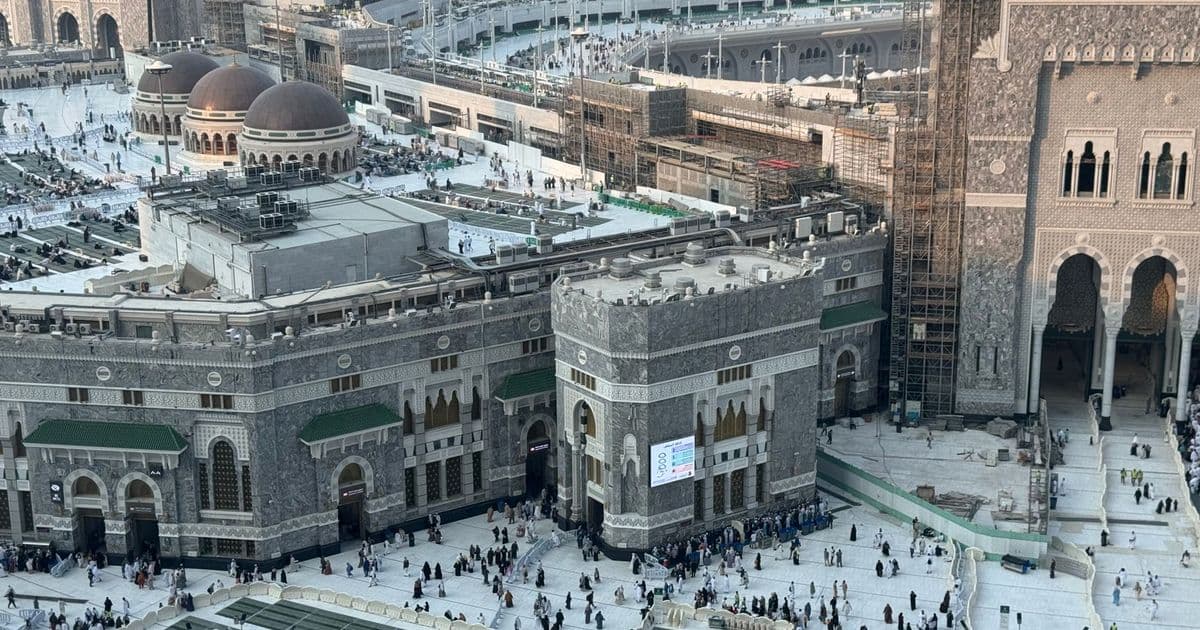
During a six-week Hajj window, a Mecca hotel can accumulate more Google reviews than it received in the preceding twelve months combined. Most properties are unprepared for the volume, the language diversity, or the emotional weight of reviews written by guests who regard the trip as the most important journey of their lives. The hotels that handle it well — structured reply workflows, language triage, careful tone — lock in a reputation signal that compounds for the rest of the year and beyond.
The pilgrim review profile (and why it differs)
Pilgrims are not typical hotel guests. They have often saved for years for this trip. They are in a state of heightened religious observance, many in ihram during Umrah or in the days leading up to Hajj. Their expectations around certain facilities — a clear qibla indicator, clean and accessible ablution spaces, prayer rugs, proximity to the Haram — are non-negotiable in ways that would be preferences in any other hospitality context.
This changes the review profile in several ways. The 4–5 star reviews from pilgrims tend to be warm, detailed, and spiritually framed: "the staff treated us with the respect befitting guests of Allah," "the room faced the Kaaba and I will never forget it." These reviews carry social proof weight that exceeds their star count — future pilgrims searching for properties read them differently than a leisure traveler reads a beach resort review.
The 1–2 star reviews are a different matter. They are more detailed, more emotionally intense, and more likely to focus on a small number of recurring issues (discussed below). They are also written in many languages: Arabic across multiple dialects, English, Urdu, Bahasa Indonesia and Malay, Turkish, French (particularly from West African pilgrims), Hausa, and Farsi. A property that only monitors and responds to Arabic and English reviews is leaving the majority of its critical feedback unaddressed.
The international composition also means that stay durations are short — three to five nights is typical for Umrah packages — which concentrates the review-writing moment. Unlike a leisure hotel where guests spread check-out dates across weeks, pilgrimage packages often depart in cohorts. A batch of 40 guests from one Indonesian travel agency may all check out the same morning and post reviews within 24 hours of each other. Volume spikes are predictable but still catch unprepared properties off guard.
What pilgrim reviewers actually complain about
The distance-to-Haram complaint is the most common single issue in negative Mecca hotel reviews — and it is often the most unfair. Guests who booked a "near Haram" property through an aggregator sometimes arrive to find the walk is 12 minutes rather than 5. The hotel's proximity has not changed; the aggregator's description or the guest's expectation did not match. These reviews are functionally unanswerable in the sense that the distance cannot change — but they are answerable in the sense that a well-crafted reply turns a complaint into useful information for future guests reading the thread.
Housekeeping cadence during peak hours is the second most common issue. Pilgrims returning from Fajr prayer at 4 a.m. do not want to find their room still un-serviced from the previous evening. Housekeeping schedules built around conventional check-in/check-out windows fail during pilgrimage seasons when guests are active at unconventional hours.
Breakfast timing generates significant complaints when hotels run breakfast from 7 a.m. — hours after many pilgrims have returned from Fajr prayer and want to eat. Properties that extend breakfast service to start at 4:30–5 a.m. during pilgrimage season see this complaint category almost disappear.
Air conditioning failures during peak summer Hajj generate the most emotionally charged reviews. A guest who is fasting, jet-lagged, and in a sacred state, who cannot sleep because of a broken AC unit in 42-degree heat, will write a review that reflects all of those compounding stresses. These reviews are avoidable through preventive maintenance; the ones that do appear should be addressed in a way that shows the property takes technical failures seriously and will prevent recurrence.
Room availability during Tahajjud and late-night prayer times matters more than most operators expect. Guests who return to find a key card that has deactivated, a room that has been accessed for maintenance, or any disruption to their night schedule during these spiritually important hours respond more strongly than they would in any other context. This is an operational issue, not a review management issue — but the reviews are where it becomes visible.
For a systematic approach to capturing the patterns in your review data and identifying which issues are costing you the most rating points, the local rank signals guide for Saudi Arabia explains how Google reads review content and keyword frequency as a ranking input.
Multi-language reply strategy
A Mecca hotel without a language triage system is effectively silent to the majority of its international reviewers. The practical reality is that a property cannot staff native speakers in every language its guests write in — but it can establish a prioritized approach that covers the highest-volume segments well and handles the rest adequately.
Tier 1 — always reply in full, in the reviewer's language: Arabic (all dialects; reply in Modern Standard Arabic or Gulf Arabic depending on property positioning) and English. These two cover 60–70% of review volume for most Mecca and Medina properties. Replies should be crafted by native or near-native speakers. Generic translations of templated responses fail in Arabic particularly — pilgrims read them immediately as automated and disrespectful.
Tier 2 — reply in the reviewer's language for repeat-volume origins: Urdu, Bahasa Indonesia/Malay, and Turkish. For most properties, these three languages represent the next largest guest segments. A bilingual reply (reviewer's language + English) works well here — it signals genuine effort to the reviewer while ensuring the content is accessible to other guests reading the thread. For crafting effective responses in these languages, the Arabic reply templates guide covers the underlying principles of culturally appropriate apology and acknowledgment tone that translate across Islamic-majority market contexts.
Tier 3 — bilingual Arabic/English reply: French (West African pilgrims), Hausa, Farsi, and any other language that appears at low volume. A warm, respectful bilingual reply is better than silence or a machine-translated response in the reviewer's language that contains errors.
Tone calibrates differently for pilgrim reviews than for typical GCC hospitality. The language should be more formal, more deferential, and should explicitly acknowledge the spiritual significance of the guest's journey. Opening a reply with a generic "thank you for your feedback" reads as dismissive to a reviewer who described the trip as "the fulfillment of a lifelong dream." Opening with "We are honored to have been part of your blessed journey" lands entirely differently — and that difference shows up in how future pilgrims interpret the exchange.
Use the reply generator to draft first versions for high-volume periods — it handles multilingual drafts and maintains the appropriate register for pilgrimage-context replies. Review and localize before posting; never post AI-generated replies without human review in this context.
Off-season: preserve the rank you earned
The six-week Hajj window and the major Umrah waves generate a reputation asset — a cluster of recent, keyword-rich, multi-language reviews that Google uses to assess the profile's relevance and activity level. That asset has a decay curve. Google's freshness signal means that a burst of reviews in March, followed by eight months of silence, produces a profile that looks increasingly stale by November.
The off-season strategy is not to manufacture reviews — Google's policies prohibit incentivized review solicitation and enforcement has increased. The strategy is to maintain a steady organic cadence by improving the moment at which post-stay review requests reach guests.
For Umrah operators running packages year-round, the off-season is often a matter of lower volume rather than zero volume. A property that hosted 300 guests during peak Hajj week might host 40 guests per week in the shoulder period. Those 40 guests are still worth engaging with a well-timed review request — a QR code at checkout, a follow-up from the travel agency that booked the package, or a WhatsApp message 48 hours after departure (when guests have returned home and have had time to reflect).
Review freshness interacts with keyword diversity in a compounding way. Off-season reviews that mention specific facilities ("the ablution room was always clean," "shuttle to the Haram ran on time") reinforce the same signals that peak-season reviews build. A profile with consistent review activity and consistent keyword themes across the year outperforms a profile with a large burst followed by a long silence — even if the burst profile has more total reviews.
For the full framework on how Google weights freshness and activity in Saudi local search, see the local rank signals guide. For building a reply workflow that keeps the profile active during low-volume periods without requiring significant manual effort, start with a free Taqymat account — the platform supports scheduled review monitoring and drafts replies in Arabic and English for pending reviews.
What to do next
The pilgrimage review window is predictable. Hajj dates advance by roughly 11 days per year relative to the Gregorian calendar, and major Umrah surges cluster around Ramadan, the last 10 days before Eid al-Fitr, and the school holiday periods in GCC countries. A property that builds its review management infrastructure before the season starts — language triage protocol, reply template library, staffing plan for the peak window — is in a structurally different position than one that reacts to the volume once it arrives.
Start with a review audit: pull your last 12 months of reviews, sort by language, and identify which segments are receiving no replies. That gap is costing you both Google ranking signal and future pilgrim confidence. Then build the reply capacity — internal staff or a platform — before the next wave arrives.
The reply generator handles multilingual drafts and maintains tone appropriate for pilgrimage-context reviews. Create your Taqymat account to set up monitoring for the peak window and the workflow that keeps the freshness signal alive between seasons.