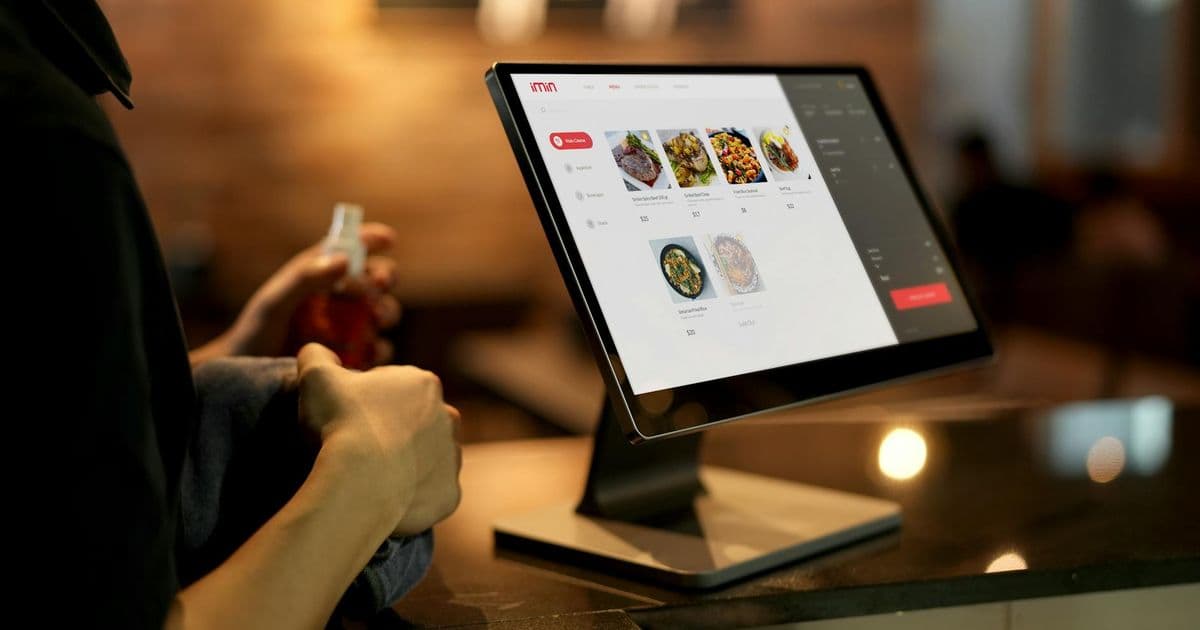
Menus and product catalogs on Google Business Profile remain one of the most under-exploited conversion levers in the GCC. Operators invest in photos, chase reviews, and monitor ratings — then leave the one feature that directly answers the question "what do you sell and how much does it cost?" either empty or three years out of date. Studies of GBP engagement data consistently show that customers who interact with a menu or product listing before visiting convert at two to three times the rate of customers who viewed only photos. In a region where purchasing decisions are fast, comparison is constant, and trust is built before the customer walks through the door, that gap is significant.
What menu and product fields actually support
Google has built more structured functionality into menus and product catalogs than most operators realise. Understanding what each field can hold is the starting point for using them well.
Restaurant and café menus support a full section hierarchy. A menu can have multiple sections — starters, cold mezze, hot mezze, grills, beverages, desserts — and each section can hold an unlimited number of items. Each item supports a name, a description of up to 1,000 characters, a price (with currency), a photo, and dietary tags. The dietary tags that GBP recognises include vegetarian, vegan, gluten-free, spicy, and halal. The halal tag is particularly important for GCC operators because it surfaces in Google Maps filters that Muslim-majority customer bases actively use.
Retail product catalogs use a different structure. Instead of sections, you have individual product listings, each with a name, a description, a price or price range, a product category, and an optional link. The link field is especially valuable — it can point to a product page on your website, a WhatsApp ordering link, or a booking URL. Retail boutiques in the Gulf that have added their top twenty items to GBP with accurate prices and a direct link to purchase have reported measurable increases in both in-store visits and online conversions originating from Google Maps.
Service-business price tiers can be represented in the Products section even when the business is not selling physical goods. A legal clinic can list its consultation packages, a gym can list its membership tiers, a beauty clinic can list its treatment menu. The key discipline is treating each service as a product: a name, a clear description of what is included, a price or starting-from price, and a photo where relevant. Vague listings ("services available — contact us for pricing") do not convert.
Food options with dietary tags are worth configuring carefully for GCC operators. Halal certification is not just a tag — it is a trust signal that drives filter-based discovery. A customer searching Google Maps for "halal burger Riyadh" will see halal-tagged GBP listings above untagged ones in most scenarios. The same logic applies to family-friendly filters, which correlate with the family-section indicator available in some GBP restaurant configurations. Configuring these tags correctly connects your listing to the search behaviour that already exists in your market.
The GCC operator playbook for menus and products
The structural capabilities are one thing. How you populate them for a Gulf audience is another. The following principles are drawn from operators across Saudi Arabia, the UAE, and Kuwait who have built high-converting GBP listings.
Arabic-first item names with English secondary. The majority of GCC search volume for restaurant and retail discovery is in Arabic. "أفضل مطعم مشاويه الرياض" outperforms "best grills Riyadh" in local query volume by a wide margin. Writing item names with the Arabic name first — "مندي لحم (Lamb Mandi)" — means the Arabic text is indexed as the primary term while English-speaking customers can still read it. Description fields should be written in Arabic, with a shortened English version appended if space allows.
Prices in the local currency without ambiguity. SAR for Saudi Arabia, AED for the UAE, KWD for Kuwait. Do not list prices in USD and expect customers to convert. Do not write "prices from" without specifying the starting price. A menu item with "Lamb Mandi — SAR 65" creates certainty; "Lamb Mandi — price varies" creates doubt that sends the customer to a competitor with clearer pricing. For restaurants that have different prices for dine-in versus delivery, list the dine-in price and note the delivery surcharge in the description.
Halal certification badge. If your business holds a halal certificate from a recognised body — SASO in Saudi Arabia, ESMA in the UAE, or a mosque-affiliated certification — upload a photo of the certificate and tag every relevant item as halal. This is not redundant with a general business tag. Attaching the halal designation at the item level means it appears in dietary filter searches, which is where the conversion happens.
Family-section indicator. GCC restaurant culture distinguishes between single-diner sections and family sections, and customers actively search for family-friendly venues. GBP allows you to configure this in your restaurant attributes. Operators who have added the family-section indicator to their profile and reflected it in menu notes ("family section — separate entrance") report better alignment between the customers who arrive and the customers they are set up to serve.
Popular-item callout. GBP allows you to mark items as popular or best-seller. Use this deliberately — not as a vanity marker but as a decision aid for first-time visitors. In a restaurant with a forty-item menu, a customer who has never visited before will default to the item marked popular. Make sure those are the items you actually want to move, that they are photographed well, and that the description explains why they are popular ("Our most-ordered dish since 2019 — slow-cooked Najdi style, serves 2–3").
Internal to this strategy: the work you do on your photo strategy for GBP directly amplifies the menu — item-level photos are drawn from the same media library, so a well-stocked photo section and a well-populated menu feed each other. Similarly, getting your GBP categories right for Saudi Arabia ensures that the menu you build is matched to the right search intent from the start.
Concrete examples by industry
Abstract principles do not help when you are staring at an empty Products screen. Here is what high-converting GBP menu and catalog structures look like across four GCC industries.
Restaurant — 30-item menu structure. A mid-range Saudi restaurant with a full Arabic menu should structure GBP as follows: Section 1 — المقبلات (Starters), 6 items, each with Arabic name, SAR price, description noting the portion size, and a food photo. Section 2 — الأطباق الرئيسية (Main Dishes), 12 items, flagging the top 3 as popular, halal-tagged across all items, family-serving sizes noted in descriptions. Section 3 — المشروبات (Beverages), 8 items, including local favourites like jallab and tamarind alongside standard options. Section 4 — الحلويات (Desserts), 4 items, with the kunafa and umm ali photographed prominently. Every item has a price. Every photo is a real plate, not a stock image.
Retail boutique — 20-product catalog. A women's abaya boutique in Riyadh should build a GBP product catalog with their twenty bestselling items or latest-season pieces. Each product listing: Arabic name first ("عباية كريب سادة — Solid Crepe Abaya"), size range noted in description, SAR price or price range if there are size variations, a clean product photo on a neutral background, and a link to the WhatsApp ordering number. Category: "Women's Clothing". The catalog does not need to include every SKU — it needs to include the items that drive discovery and conversion. Seasonal items should be added when they go live and removed when the season ends.
Salon — service-tier listing. A women's salon in Dubai should use the Products section to list its core services. Each service as a product: "قص وتمشيط (Cut and Blow-dry)" — AED 120 starting from, description noting that the price varies by hair length with a link to the booking page. "صبغة كاملة (Full Colour)" — AED 250 starting from, description noting brand of colour used (a trust signal in the salon market), link to booking. "كيراتين (Keratin Treatment)" — AED 350 starting from, photo of finished result, link to booking. The "starting from" price is acceptable here because service pricing genuinely varies — but the description must explain the variables so customers are not surprised at the counter.
Café — specialty coffee menu. A specialty coffee café in Kuwait should structure their GBP menu with deliberate attention to the growing coffee-literate audience. Section 1 — القهوة المختصة (Specialty Coffee), 8 drinks, each with origin noted for single-origins ("إثيوبي يرغاشيف — Ethiopian Yirgacheffe"), KWD price, brew method, and a tasting note in the description. Section 2 — المشروبات الباردة (Cold Drinks), 6 items, summer seasonal items flagged. Section 3 — الطعام (Food), 8 items including the top pastries and sandwiches, halal-tagged. Every item has a price. The café's most Instagrammed drink — the one that generates UGC naturally — should have two photos: the finished product and the pour or preparation.
Pitfalls that cost GCC operators conversions every day
The gap between a well-built GBP catalog and the average Gulf operator's listing is wide. The following mistakes are common, measurable, and fixable.
English-only catalog. A restaurant in Riyadh with a menu written entirely in English is systematically invisible to the majority of Arabic-language queries. This is not a translation preference — it is an indexing problem. Google uses the text in your GBP menu to match your listing to search queries. An Arabic-speaking customer searching for "مطعم مشاوي" in Google Maps will find menus that contain Arabic text before they find menus that do not. If your catalog is currently English-only, the fix is straightforward: translate the item names and the most important descriptors into Arabic and update the listing.
Missing prices. A menu item without a price is a friction point. The customer's next move is to call, to visit the website, or to move on to a competitor who has published their prices. In a GCC market where customers frequently compare two or three options on Google Maps before deciding, removing price friction is a direct conversion lever. If you are uncomfortable publishing exact prices because they change with market conditions, publish a "starting from" price and note in the description how to confirm current pricing.
Outdated items. A menu that still shows a seasonal item that ended six months ago, a product that is discontinued, or a price that was last updated before the most recent VAT rate change actively damages trust. A customer who orders based on your GBP menu and finds that item unavailable — or priced differently — will write about it. Treat the GBP menu as a live document: assign one person the responsibility of updating it whenever the underlying menu changes.
No photos per item. A listing with item names and prices but no photos is better than no listing, but it is leaving conversions behind. Item-level photos consistently outperform text-only listings for click-through rate. The photography does not need to be professional — a clean, well-lit photo on a neutral background, taken on a recent smartphone, performs better than no photo. For the most important items (your best-sellers, your signature dishes, your highest-margin services), professional photography pays for itself in short order through the lift in conversions.
Conflicting prices across GBP, website, and platforms. This is the pitfall with the highest customer-facing cost. A customer who sees SAR 55 on GBP, SAR 60 on your website, and SAR 65 on Zomato has been given three different prices for the same item before they have ordered anything. The review that follows will name the inconsistency explicitly. Establish a single source of truth — the printed menu or POS system — and make it the update trigger for all platforms simultaneously.
What to do next
The return on a well-built GBP product or menu section is disproportionate to the time it takes. Most operators can build a complete, accurate, bilingual, photo-supported menu in two to three hours of focused work. The maintenance cost after that is low — an update whenever the menu changes, a photo refresh each season.
Start with your ten highest-margin or most-ordered items. Build those listings to the full standard described above: Arabic-first name, SAR/AED/KWD price, halal tag if applicable, item photo, description with a concrete detail that helps a first-time customer decide. Publish those ten, measure the click-through rate on your GBP performance dashboard over the following four weeks, then expand to the full catalog.
If you are not yet tracking which GBP features are driving the most discovery and action, connect your profile to Taqymat to get a structured view of where your listing is winning and where it is leaving conversions on the table.
The operators winning GCC local search right now are not necessarily the ones with the most reviews or the most photos. They are the ones who have answered the customer's core question — "what do you sell and how much does it cost?" — before the customer has to ask.