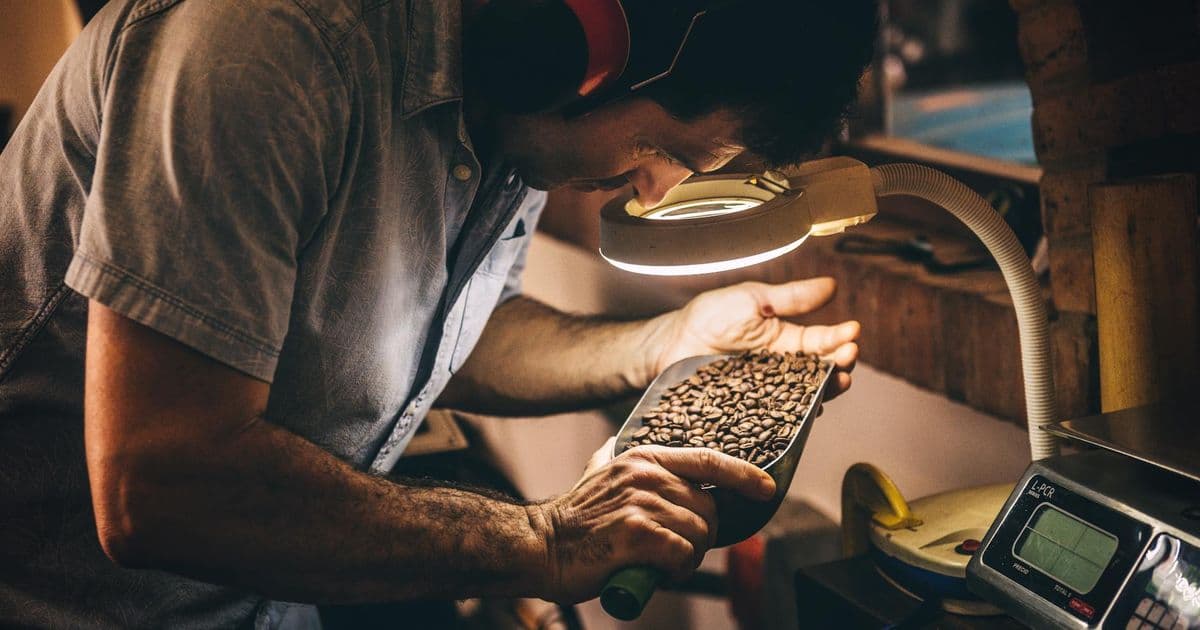
The GCC specialty coffee scene that began gathering momentum around 2018 has matured into one of the most competitive and opinionated beverage markets in the region. Roasters in Riyadh, Dubai, Kuwait City, and Manama now compete not just on cup quality but on bean-origin transparency, roast-date freshness, brewing-method authenticity, and the increasingly important intersection of specialty culture with traditional Arabic coffee heritage. The reviewers who walk through their doors — or receive their mail-order bags — are not casual drinkers. They are enthusiasts who have read the tasting notes, watched the YouTube tutorials, and will notice when something is off before they finish the first cup.
What GCC specialty coffee customers actually review
Specialty coffee reviewers in the GCC evaluate roasteries on a set of criteria that would not appear in a standard restaurant review. Understanding each dimension helps you build a reply framework that addresses real concerns rather than deflecting with generic hospitality language.
Bean-origin authenticity. Reviewers who order an Ethiopian Yirgacheffe expect it to taste like an Ethiopian Yirgacheffe — bright, floral, with the citrus and berry notes the origin is known for. If the cup arrives tasting flat or generic, they will question the origin claim. In the GCC market, where imported specialty beans carry a price premium, origin mislabelling — whether accidental or otherwise — generates some of the most negative and most-shared reviews in the category.
Roast-date freshness. This is the single most-commented criterion in GCC specialty coffee reviews. Enthusiast customers know that whole-bean coffee peaks between one and three weeks post-roast and degrades meaningfully after six to eight weeks. They check the roast date on the bag. When a bag arrives with a roast date from four months ago, or when no date appears at all, the review is predictable. Roast date is not a nice-to-have detail — it is a trust signal that specialty customers treat as non-negotiable.
Brewing-method expertise. Roasteries that offer espresso bars, pour-over bars, or brewing classes are reviewed on the competence of their baristas, not just the quality of their beans. A reviewer who requests a V60 extraction and receives a rushed, under-extracted pour will note the water temperature, the pour pattern, and the total brew time. These reviews are highly detailed and highly credible to other enthusiasts reading them on Google Maps.
Saudi-grown beans alongside imports. The emergence of Saudi specialty coffee — beans grown in Jazan and Al-Baha — has added a local-pride dimension to GCC roastery reviews. Roasteries that stock and promote Saudi-origin beans signal cultural investment. Reviewers who specifically visit to try local offerings will review the experience of accessing and brewing Saudi beans, not just the imported catalogue.
Traditional Arabic qahwa expertise. This is where many specialty-focused roasteries lose points they should not. Arabic qahwa — prepared with green or lightly roasted beans, cardamom, and saffron, served at the correct temperature in a dallah — is an entirely distinct and respected brewing tradition. Specialty roasteries that relegate qahwa to a footnote, serve it poorly, or train staff only in Western brewing methods will attract reviews from local customers who feel the roastery does not respect the region's coffee heritage. This feedback pattern is especially common in Riyadh and Dammam, where qahwa remains a daily ritual for a large share of the population.
Family-section availability. In Saudi Arabia specifically, the family section is not a preference — it is a practical requirement for mixed-gender groups and families. A roastery that runs out of family-section capacity during peak hours, or that manages the section poorly, will generate Google reviews that have nothing to do with the coffee. These reviews rank among the most-read because they reflect an experience that affects how guests plan their visit before they arrive.
For roasteries building systems to track and respond across all these criteria, the Taqymat onboarding process walks through how to structure review monitoring across complaint types and brewing contexts.
Reply anatomy for enthusiast reviewers
Replying to specialty coffee reviews requires a different register than replying to general restaurant feedback. The reviewer knows more about coffee than most of your front-of-house staff, and they can tell when a reply has been written by someone who does not. The wrong reply to a sophisticated critique does more damage than no reply at all. The right reply builds lasting credibility with the single segment of your audience most likely to share your content and recommend you to other enthusiasts.
Acknowledge the specific bean or method they mention. A reviewer who writes "your Rwanda Huye Mountain was roasted too dark for the varietal" wants to see that you read what they wrote. Open your reply by naming the coffee: "Thank you for sharing your thoughts on the Huye Mountain — you're right that this lot's roast profile is a point we've been calibrating." Generic openings like "we're sorry to hear this" signal immediately that no one with coffee knowledge wrote the reply.
Engage technically without showing off. There is a narrow band between demonstrating expertise and performing it. A reply that explains the relationship between roast development time and perceived acidity in a single sentence is informative. A reply that runs three paragraphs on the Maillard reaction is alienating to the casual reader also seeing this reply on Google Maps. Aim for one technical observation per reply, maximum — enough to signal knowledge, not enough to lecture.
Address freshness and origin questions seriously. When a reviewer questions roast-date freshness, respond with specifics: when that lot was roasted, your current restocking schedule, and what they should expect if they return. When a reviewer questions origin accuracy, acknowledge it directly and invite them to contact you to discuss sourcing documentation. Do not be vague, and do not be defensive. Specialty customers interpret vagueness as evasion.
Invite return with a specific tasting context. Generic "please visit us again" closings are throwaway lines in specialty coffee replies. A closing that reads "we'd love to have you back for the Guji natural lot that arrives next week — it's been getting strong feedback from our wholesale clients" is memorable, specific, and signals that you know your own inventory. It also gives the reviewer a reason to return that is tied to the exact concern they raised.
This reply structure aligns with the principles covered in how to write 5-star Arabic replies, which covers tone, structure, and language-matching across Arabic and English reviewer profiles.
Reply templates by complaint type
These templates are built for the complaint patterns most common to GCC specialty roasteries. Each uses bracketed variables for personalisation. Replace every variable before publishing — a template with visible brackets is worse than no reply at all.
Stale or old beans
"Thank you for writing, [GUEST_NAME]. The roast date on your [BEAN] bag is something we take seriously — our standard is to ship within ten days of roast, and if what reached you fell outside that window, we want to make it right. Please reach out directly with your order details and we will send a fresh roast or issue a full refund. We will also review this lot's dispatch dates on our end."
Incorrect brewing method
"[GUEST_NAME], thank you for the detailed feedback on your [METHOD] experience. Getting the extraction right on that brew style takes consistency we clearly missed for you this visit. We've noted this for our team and would love to have you back for a complimentary [METHOD] — we'll make sure the right barista handles your cup."
Over-roasted beans
"Thank you, [GUEST_NAME]. Your note on the [BEAN] roast level is fair — we're currently calibrating this lot and you're not the first to raise this. We genuinely value the feedback because it helps us adjust before the next batch goes out. Please DM us and we'll make sure your next bag reflects the roast profile we're aiming for."
Origin mislabelling concern
"[GUEST_NAME], this is not a concern we take lightly. If you have questions about the sourcing documentation for the [BEAN] lot, please reach out directly — we're happy to share traceability details. We work with specific cooperatives and importers, and transparency about origin is core to what we do. We want to earn your trust back on this."
Brewing class cancelled
"We're sorry your [METHOD] class was cancelled without enough notice, [GUEST_NAME] — that's a logistics failure on our part and it shouldn't have happened. Please contact us directly and we'll prioritise a spot for you in the next session at no additional charge. We're also reviewing how we handle session-change communications so this doesn't happen to others."
Family-section overflow
"Thank you for the feedback, [GUEST_NAME]. Reaching capacity in the family section during peak hours is something we're actively managing — it affects the experience in a way that has nothing to do with the coffee, and that frustrates us too. We're looking at reservation options for the family section and hope you'll give us another chance once we have that in place."
Traditional qahwa critique
"[GUEST_NAME], your feedback on our qahwa preparation is something we genuinely want to act on. Arabic qahwa is not a secondary offering for us — it sits alongside our specialty programme as a core part of what we serve. If the cardamom balance or serving temperature was off, we want to know the details. Please reach out directly and we would like to invite you back for a complimentary preparation."
For broader context on how complaint-type templates work across Arabic-language reviews, the guide on cloud kitchen reviews in KSA covers a parallel approach for high-frequency operational complaints in a different hospitality segment.
Pitfalls that cost GCC specialty roasteries their reputation online
Most of the worst Google review outcomes for specialty roasteries in the GCC are self-inflicted. The coffee is good, the sourcing is credible, but the reply behaviour destroys the trust that the product built.
The defensive coffee-snob tone. This is the most damaging pattern. A reviewer writes that your light roast "tasted sour and unpleasant" and your reply explains — at length — why acidity is desirable in a washed Ethiopian and why the reviewer's palate may not be calibrated for specialty profiles. You have now told a potential customer, in public, that they are wrong for having a preference. The reviewer's friends, family, and followers will read that reply. Many of them will never visit. Correct, educate, and invite — but do it in private DMs, never in the public reply.
Over-technical replies that exclude non-enthusiast readers. Your reply is not read only by the reviewer. Every person who searches your roastery on Google Maps reads your replies too. A reply dense with terminology about Brix levels, degassing curves, and single-dose grinding will confuse the majority of readers who are simply trying to decide whether to visit. One technical term per reply, in plain context, is the ceiling.
Ignoring traditional Arabic qahwa customers in favour of specialty. A roastery in the GCC that positions itself as specialty-forward but neglects qahwa feedback is making a cultural statement it may not intend. Reviewers who feel their qahwa experience was dismissed or deprioritised — in Saudi Arabia especially — will say so publicly and specifically. These reviews carry local credibility that no amount of third-wave positioning can offset. Treat qahwa complaints with the same depth and seriousness as complaints about your single-origins.
English-only replies to Arabic enthusiast reviews. Specialty coffee culture in the GCC has a large, vocal Arabic-language community. Reviewers who write in Arabic and receive replies only in English understand the signal being sent: their language is not a priority. This is especially damaging when the Arabic review is detailed and technically informed. A bilingual reply is better than English-only; a fully Arabic reply is best. If your team cannot write a credible Arabic reply, use a reviewed translation and have a native speaker approve the tone before publishing.
Slow replies on high-visibility complaints. A detailed one-star review from a verified local guide or a reviewer with hundreds of followers will be seen before you reply. Every hour of delay is an hour that review sits unanswered. Set a response target of under 24 hours for any review that names a specific product, method, or person. The specialty coffee community in the GCC is small enough that a fast, credible reply gets noticed — and shared.
What to do next
Start by auditing your last thirty Google reviews for patterns. Are you seeing repeated mentions of the same bean? The same brewing station? The same time of day for family-section complaints? Pattern recognition is the first step to building a reply system that improves operations, not just public perception.
Once you have identified your top three complaint types, draft a template for each using the structures above. Test each template against a real review from your archive — does it sound like a person who knows the coffee, or does it sound like a generic hospitality apology? If it is the latter, revise until it passes that test.
Then set your response cadence. For a roastery with moderate review volume, a daily fifteen-minute review audit — checking Google Business Profile and any delivery or retail platform you use — is sufficient. For higher-volume operations or during peak periods like Ramadan and Eid, increase to twice daily.
The Taqymat onboarding flow can help you set up a structured monitoring and reply system across your review channels, with templates organised by complaint type and language. The goal is a reply programme that runs consistently, not one that responds only when a review goes viral.